
Hubbuy Spreadsheet, with the rules in view
Browse products, then check the restrictions, return windows and shipping cover that matter to your order.
Search opens the product catalogue. Orders, QC and shipping run on the operator's site.
Browse by category
Choose an item type, then check its seller and shipping restrictions.
16 categories
No category matches. Try a broader word or clear the filter.
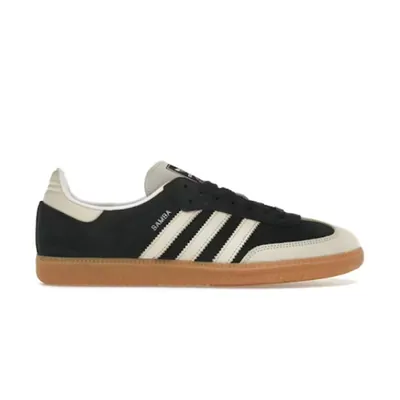 Sneakers
Ask what the shoe boxes do to the parcel before you order five pairs. Keeping them is your own call at the warehouse, and it is the choice that meets a size limit long before it meets a weight limit.
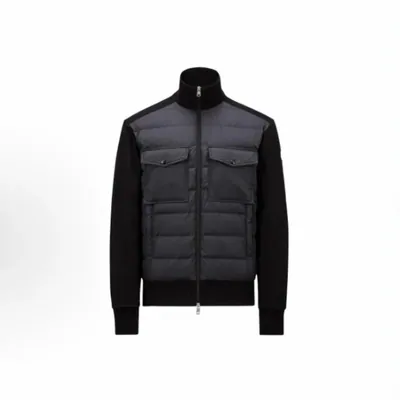 Outerwear
A winter coat is bulk before it is weight. Read what a route will carry first and choose the coat second, rather than finding the ceiling after the box is already packed.
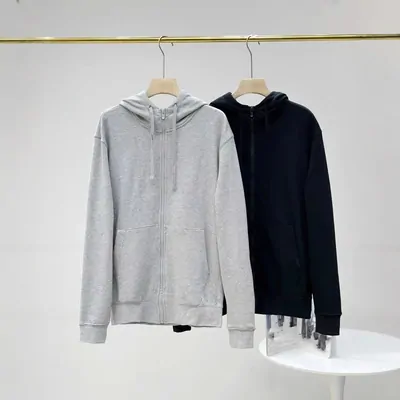 Hoodies
Plain cotton is the case where nothing goes wrong, which makes it a sensible first order. You find out what the warehouse checks while nothing much is riding on the answer.
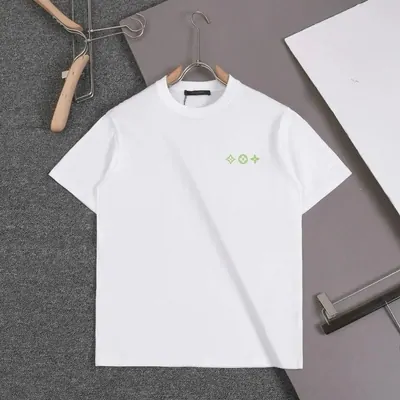 T-Shirts
Cheap and light is not the same as unexamined. The box still gets opened, and on a T-shirt it is usually the print rather than the shirt that gets looked at.
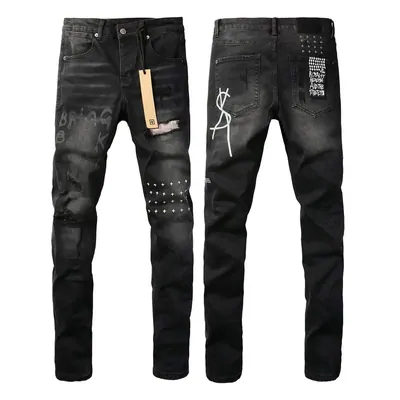 Jeans
JeansDenim is heavy for how little room it takes up. Weight is the one limit you cannot talk your way around once the parcel is sealed, so work it out before you consolidate rather than after.
 Sweatpants
The top and the bottom of one outfit reach the warehouse as two pieces, not as one purchase. Count pieces when you read a fee table, because pieces are the unit the bands are written in.
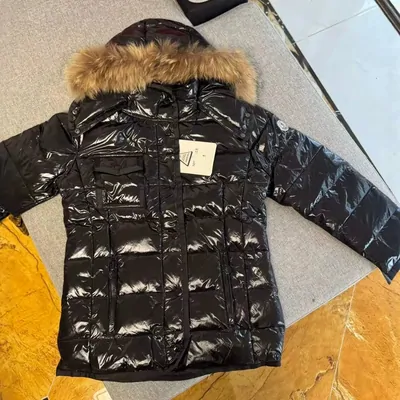 Womenswear
Womenswear has no section of its own here, so this card hands a keyword to the search instead. What comes back shifts as sellers relist, so save the link to an item and not to a page of results.
 Jerseys
Team shirts carry names, numbers and crests that belong to somebody else. That is the ground the operator states its counterfeit clause on, and the clause is short enough to read before you order.
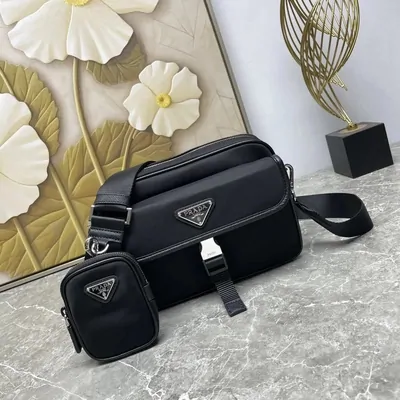 Bags
BagsOnce the value climbs, the question stops being postage and starts being cover. Find the ceiling that applies on your route before you decide what the box is worth to you.
 Hats
HatsA cap is cheap to buy and cheap to replace. Whether it is worth covering has a real answer, and the answer comes from the published figures rather than from what you paid.
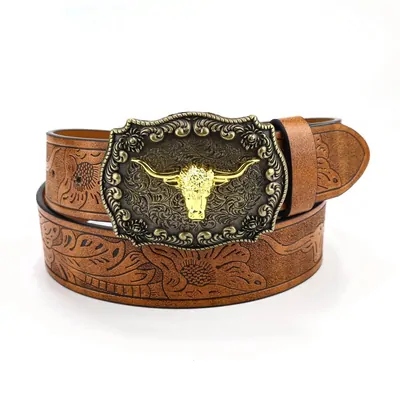 Belts
BeltsAccessories go in last, when the order is already sitting near the edge of a band. One more small piece can be the piece that moves the whole parcel into the next one.
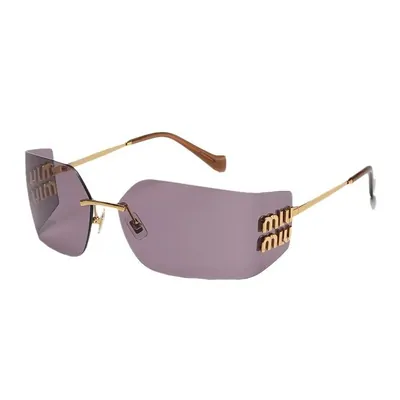 Eyewear
Lenses break. Breakage is where the gap between a covered route and an uncovered one stops being an abstraction and turns into a figure you either can or cannot claim.
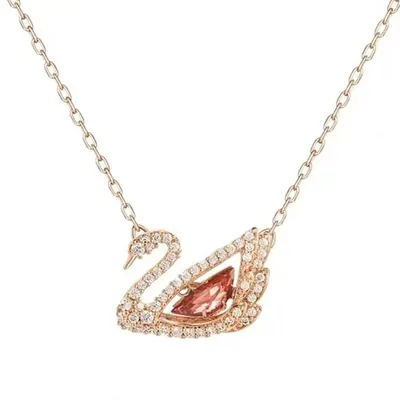 Jewelry
Small, valuable and easy to lose inside a full parcel. This is the category where the cap on a claim matters more than anything you are going to save on shipping.
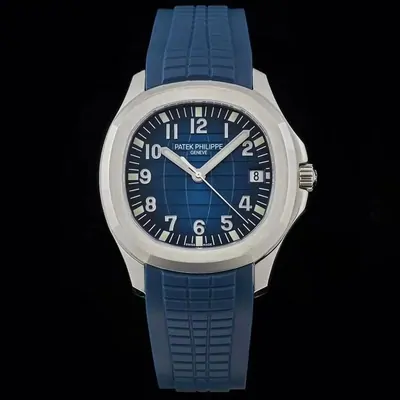 Watches
One watch can be worth more than everything else in the box put together. Read what the route would actually pay out before you decide it travels with the rest of the order.
 Perfume
Fragrance is alcohol, and alcohol is the plainest example of the difference between restricted and prohibited. Work out which of the two words applies before you order, not afterwards.
 Electronics
A battery picks the route before you do. Find out what can still carry the parcel, and whether it can be covered at all, while you are still deciding whether to buy it.
Operator access varied during the 7 October checks; some help pages later loaded normally. Dated status.
Three gates a parcel has to pass
Every order that leaves a Chinese warehouse passes three checks, in this order. Each one is governed by a different published document, each one can stop the order on its own, and the first two close well before the parcel is anywhere near your address.
Can it leave at all
The prohibited and restricted goods rules decide this, and they are two lists rather than one: what may not leave China, and what may not enter your country. A sensitive item is usually not refused, it is routed. Read the blocked and restricted lists.
Can it still go back
A five day clock starts when the warehouse marks the order stocked in, not when you pay and not when it arrives. Miss it and the return request is no longer accepted. Read the return and exchange rules.
Will a claim pay anything
Cover is attached to the shipping line, not to your account, and three lines on the operator table carry no cover at all. Read what a claim pays.
Some goods never leave the country
The first gate is not about your parcel, it is about the item. The operator publishes the rule as a pair of restrictions that apply in opposite directions, and reproduces the legal basis it is working from. That is unusual and it is useful: it tells you the refusal is not a customer service decision that can be argued with.
What follows from it is practical. If an item is on the outbound list it will not ship no matter which route you pay for, no matter how it is packed, and no matter what the seller told you. The full lists, with the categories that get flagged.

What Hubbuy says it is, and what it says it is not
Before any of the three gates makes sense, it helps to read how the operator describes its own role. This is the whole of the relevant paragraph, copied from its service role page. It explains why a refusal, a seizure or a quality dispute lands where it lands.
Hubbuy is not the manufacturer, brand owner, or actual seller of goods listed on third-party e-commerce platforms. Product information, descriptions, quality, authenticity, and intellectual property status are generally provided by third-party sellers.
Service Role Description, read on 2026-09-24. What that leaves you responsible for.
Sensitive goods are a routing problem, not a ban
The word people get wrong is sensitive. It does not mean forbidden. It means the item cannot travel on an ordinary air line, so it needs a line that accepts it, and those lines are slower, more expensive, or limited to certain destinations. Liquids, powders, magnets, batteries and branded goods each land in this bucket for a different reason.
The distinction matters at checkout, not on arrival. If you find out after paying that your item is sensitive, your choice narrows to a handful of lines, and some of those are the same lines that carry no cover. How the operator sorts sensitive from ordinary.

What a Hubbuy Spreadsheet actually is
A glossary entry first, because the word travels badly. In this corner of the internet a spreadsheet is a shop window: a browsable set of product cards, grouped by category, each card carrying a picture and a link to the seller it came from. The name stuck for historical reasons and now means roughly what a catalogue means anywhere else.
What it is
- A page of product cards you scroll and click, grouped into categories like sneakers, outerwear, bags and watches.
- A shortcut past the part most people find hard, which is finding the seller listing in the first place.
- A starting point. The card sends you to the listing; the order, the quality photos and the shipping all happen at the operator.
- The sixteen category walls this site uses.
What it is not
- Not a document you download, open in an office suite, or edit.
- Not a shop. Nobody here takes your money, holds stock or ships anything.
- Not a guarantee. A card tells you a seller listed an item; it does not tell you the item will pass a quality check or clear your customs.
- Not a price list. Amounts move, sellers vanish, and this site quotes none of them.
The customs risk the operator names out loud
Second gate, and the one most sites skip. The operator publishes its own answer to the question of what happens at customs, and the answer is not reassuring in the way marketing copy usually is. It names inspection, tax and seizure as ordinary outcomes rather than rare accidents, and it says plainly which of them it will not compensate.
Reading it before you order changes what you buy, not just how you feel about it. Thresholds by country, spot checks, and what a returned or destroyed parcel costs you.

Cover is attached to the route, not to your account
This is the finding that reorganised the whole site. The insurance article states a single ceiling for everyone. The attachment linked at the bottom of that same article lists the ceiling line by line, and the lines do not agree with each other. Most carry the same pair. A few carry more. Three carry nothing at all.
The bars below are drawn to one scale so they can be compared honestly. Every number comes from the operator's own attachment, read on 2026-09-24. The full table, including the three zero rows.

Maximum insured amount per parcel and maximum compensation per item, in yuan, as published by the operator
FJ-BR-line-Dactual weight
The pair almost every line of the attachment carries.
JYTD-BR-line-DBrazil
Same destination, same crop of the table, a different ceiling.
JYTD-BR-line-TBrazil
Its sister line matches it, so this is not a typing slip.
LT-HKUPS-6000tax not included
Not on this crop. Two express lines and one Brazil line sit at zero further down the same table; they are reproduced in full.
When cover starts, and the moment it stops
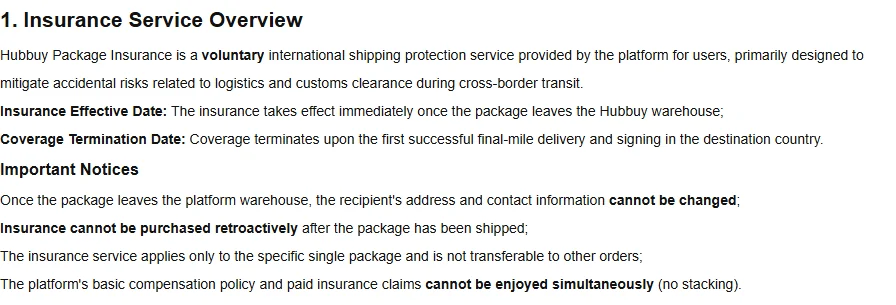
Two sentences in the compensation rules do more work than the rest of the article. Cover begins when the parcel leaves the warehouse, so nothing that happens to an item inside China is an insurance question. And cover ends at the first successful final mile delivery, which means the moment the carrier records a signature, the policy is over whatever you find in the box afterwards.
There is a third sentence worth memorising: cover cannot be bought retroactively. Once a parcel has shipped, the decision is made. What the claim rules pay, refuse and cap.
From a listing here to an order at Hubbuy
The route from a card on this site to a parcel at your door runs through the operator, not through us. These are the steps, and the decisions that matter sit in the third and the fourth rather than the first.
Find the item
Open a category wall, or use the search box at the top of this page. Both land on the catalogue listing, which carries the original seller link.
Submit it to the operator
Paste the seller link into the order form on the operator's site. The operator buys from the seller on your behalf and receives the item at its warehouse.
Watch for the stocked in status
This is the status that starts the five day return clock and the point at which basic inspection photographs are taken. It is the last cheap moment to change your mind. What inspection does and does not check.
Choose a route, then decide on cover
The shipping estimate on the operator's quote page will price several lines. Before you pick one, check what that line pays if it loses the parcel. Where to look it up.
Sending it back while it is still in China
The return window is the rule people discover too late, because it is counted from a warehouse event rather than from anything you can see on your own calendar. The operator states it twice in the same sentence, once in days after signing and once in days after stock in, and the second number is the one that binds.
It is also not the operator's decision. Returns go back to the third party seller under that seller's policy, and the operator negotiates rather than rules. Who pays, what condition the item has to be in, and the categories that cannot go back at all.

Words that only matter once something is wrong
A short glossary, and deliberately not the usual one. These are not shopping terms, they are the terms the rules are written in. Every one of them is a word you can ignore right up until the day you need to argue about a parcel, at which point it decides the argument.
- Stocked in
- The warehouse has received the item from the seller and logged it. This status, not your payment and not the delivery, starts the return window. Where it appears in the rules.
- Signed
- The carrier has recorded a successful final mile delivery. Cover terminates at this moment, before you have opened anything.
- Undelivered
- The carrier word for a parcel it could not hand over. It is a defined status with its own consequences, not a synonym for late. What follows from it.
- Sensitive goods
- Items that need a particular kind of shipping line rather than a refusal. Liquids, powders, magnets and batteries are the usual four. How they are sorted.
- Declared value
- The figure a claim is measured against. The rules apply a lower of the two principle between it and what you actually paid.
- Actual weight
- A suffix you will see on route names. It tells you the line bills by weight on the scale rather than by the volume the box takes up.
- Related attachment
- The operator's phrase for a document linked at the foot of a help centre article. On the insurance article it is where the per route ceilings live, and it is easy to miss. Read it here.
Questions the operator answers itself
A lot of what gets asked in forums is already answered in the published rules, in writing, by the company that will be making the decision. The return article ends with a numbered set of those answers, and the first one deals with the case almost everybody hits: an item that is not covered by the guarantee at all.
Where the operator has answered a question, this site quotes and links rather than paraphrases, because on a dispute the wording is the whole point. The help centre map, and which article governs what. What has changed since these pages were read.
