
What this reading found, and the date it was read on
Every page on this site is built from one full pass through the published rules, made on 2026-09-24. This page is the log for that pass. It records four things the documentation does to itself, all of them visible in the source rather than inferred, and it is the page to check first if something here no longer matches what you see upstream.
Last updated 2026-09-24. Every figure below was read on 2026-09-24.
7 October 2026: operator access check
The official Hubbuy website and its migration page displayed a 500 server error in an earlier browser check. Later on the same date, the homepage, guide and a help article rendered normally with HTTP 200. The migration URL returned HTTP 200 but did not show the migration article in that check. Access varied; these observations do not establish that the service closed or that its policies changed.
The current homepage mentioned 300 days of free storage while the guide mentioned 90 days. Those two official statements conflict. Ask the operator which condition applies to your items before relying on either one.
The policy excerpts and photographs below remain a record of the 24 September reading. Their source dates have not been refreshed. Confirm the current policy with the operator before paying or relying on a return or insurance condition.
How this log is kept, and what it deliberately does not claim
A changelog needs two dated readings to say anything. There has been one. So this is a first reading rather than a record of what changed, and it is labelled that way on purpose.
One pass, one date, named on every page
Each figure on this site carries the date it was captured and the article it came from. Nothing is reproduced from memory or from a second hand summary of the rules.
Contradictions are shown, not adjudicated
Where two published documents disagree, both are reproduced and the disagreement is pointed at. Deciding which one an operator will honour is not this site's to make. The largest of them.
Nothing is described as a change without two readings
A typo found today might have been there for a year. Calling it new would be a guess dressed as a fact, so this page says found rather than introduced.
Corrections are wanted
If something here has gone stale or was misread, [email protected] is the address. The source article is named next to every figure precisely so that a correction can be checked in one click.
The zero rows are not a rendering fault
The single most consequential thing in this reading is that three route names on the insurance attachment carry a published ceiling of zero in both columns, while the article that links to the attachment states a flat cap for everyone. The obvious first suspicion is a broken cell or a failed lookup.
The crop below is what rules that out. The zero row sits directly above an ordinary row on the same sheet, in the same style, with the usual pair of numbers intact. Whatever produced the zeros produced its neighbour correctly, and two of the three zero rows are consecutive sister lines of each other. All three, drawn to one scale.


Two small errors that say something about proofreading
Neither of these changes what a rule means, and neither is worth complaining about on its own. Together they are a useful signal about how closely the documents have been read since they were written, which is worth knowing before you rely on a single sentence in one of them.
The first is a dropped letter at the start of an exclusion clause, leaving a word that is not a word. The second is on the link that leads to the attachment holding the zero rows: two misspellings in one short line of text, on the one link a reader most needs to follow. Where that link leads.
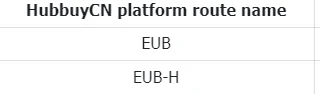
The attachment still carries the previous brand name
The column heading on the insured amount sheet names a platform that is not the one linking to it. It is not a typo and it is not ambiguous: it is the header of the authoritative document for every route ceiling on the service.
This matters for a practical reason rather than a cosmetic one. Route ceilings are the sort of thing that gets set once and copied forward, and a header carrying an older name is the clearest evidence available that this particular sheet has been carried forward rather than rewritten. It is also why anything you find under the old name elsewhere on the web should be checked against the current article before you act on it.
Markup reaching the reader as literal asterisks
The unboxing rules open with the sentence that tells you a video is needed at all, and it reaches the reader with its emphasis markers printed as text. Pairs of asterisks sit around the two phrases that were meant to be bold, which means this document was authored in one format and published without being converted.
It is worth flagging because of where it sits rather than how it looks. This is the opening line of the procedure that decides whether a damage claim can be filed at all, and a document that reached publication without a conversion pass is a document nobody proofread on the page. The five steps it introduces.

What the next reading will check, and what it will not
Keeping a log honest is mostly a question of deciding in advance what counts as news. These are the items already queued for the next pass, and the categories that will never appear here however tempting they get.
Queued for the next pass
- Whether the flat cap in the insurance overview and the ceilings on its own attachment have been reconciled, in either direction. Both, side by side.
- Whether the three zero rows are still zero, and whether any route has joined or left them.
- Whether the tariff threshold table has been revised, since it carries its own disclaimer about being a reference only. The table.
- Whether the prohibited and restricted lists have moved, which is the one category here that changes with regulation rather than with editing. The lists.
Never logged here
- Prices, rates and delivery times. They move faster than any page can track, and a stale number is worse than no number.
- Anything about the operator that is not written down in its own published documents and reproduced here as a picture.
- Claims that something has changed, until a second dated reading exists to compare against the first.
- Opinions about whether a rule is fair. What it says and what it leaves unsaid are checkable. Whether it is reasonable is yours to judge.